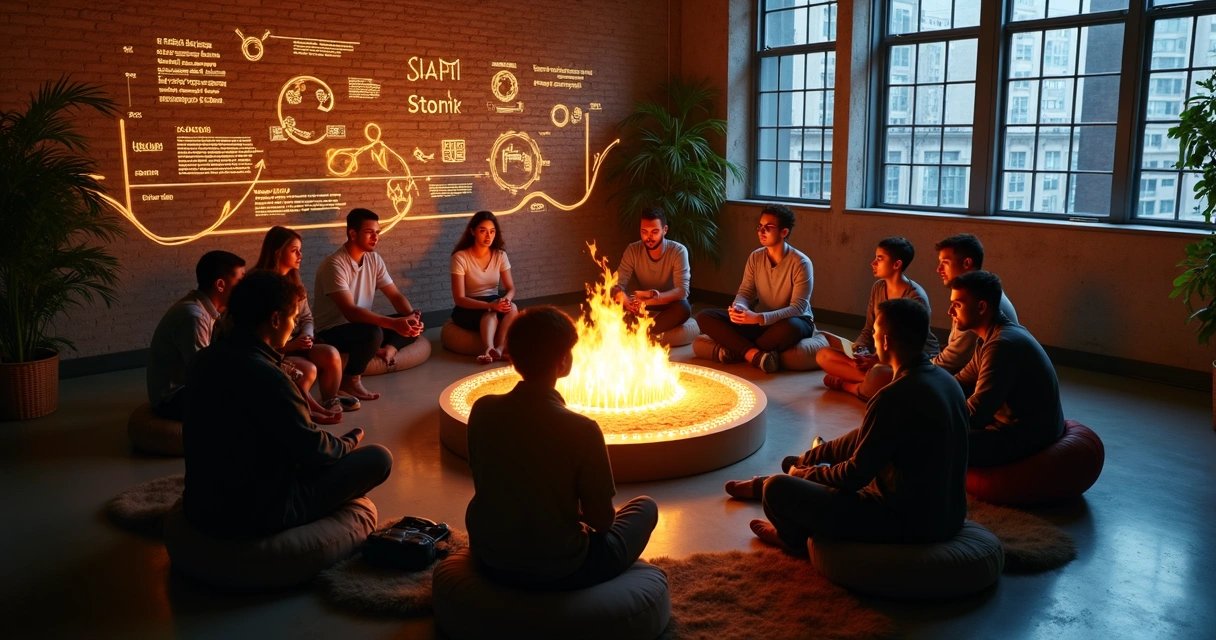
Families rarely break because of one big event. In our experience, they drift apart through small habits. A rushed answer. A meal eaten alone. A feeling left unnamed. Then the home grows noisy, but not close.
Marquesian consciousness starts from a simple view. Family harmony grows when inner awareness becomes daily practice. Love, by itself, is not always enough. We also need presence, emotional honesty, and shared forms of care.
We have seen this in ordinary homes. A parent comes back tired. A child wants attention right then. A partner carries a silent hurt from the morning. Nothing dramatic happens. Still, tension fills the room. In that moment, a ritual can protect the bond. Not a rigid rule, but a repeated act that teaches people how to meet each other well.
These seven rituals are not meant to create a perfect family. They help create a more conscious one. That is a better goal, and a more human one.
Why rituals matter at home
Rituals give shape to values. Many families say they want peace, trust, and respect, but daily life often moves too fast for those values to become action. A ritual slows the rush. It gives the family a place to return to.
There is also strong social value in shared routines. Data from the U.S. Census Bureau on family dinners showed that most children ate dinner with a parent at least five days a week over many years. That tells us something simple and powerful. Families still seek repeated moments of connection, even in busy times.
What repeats, teaches.
The seven rituals
1. The two-minute arrival pause
When someone enters the home, we suggest not jumping straight into demands, complaints, or screens. Take two minutes. Breathe. Greet each other with full attention. Let the body arrive before the conversation begins.
This ritual helps reduce emotional spillover. The stress from work, school, traffic, or noise does not need to take over the next hour. In our view, this is one of the simplest ways to stop unconscious reactions before they spread.
A conscious home often begins with a conscious arrival.
2. The shared table without devices
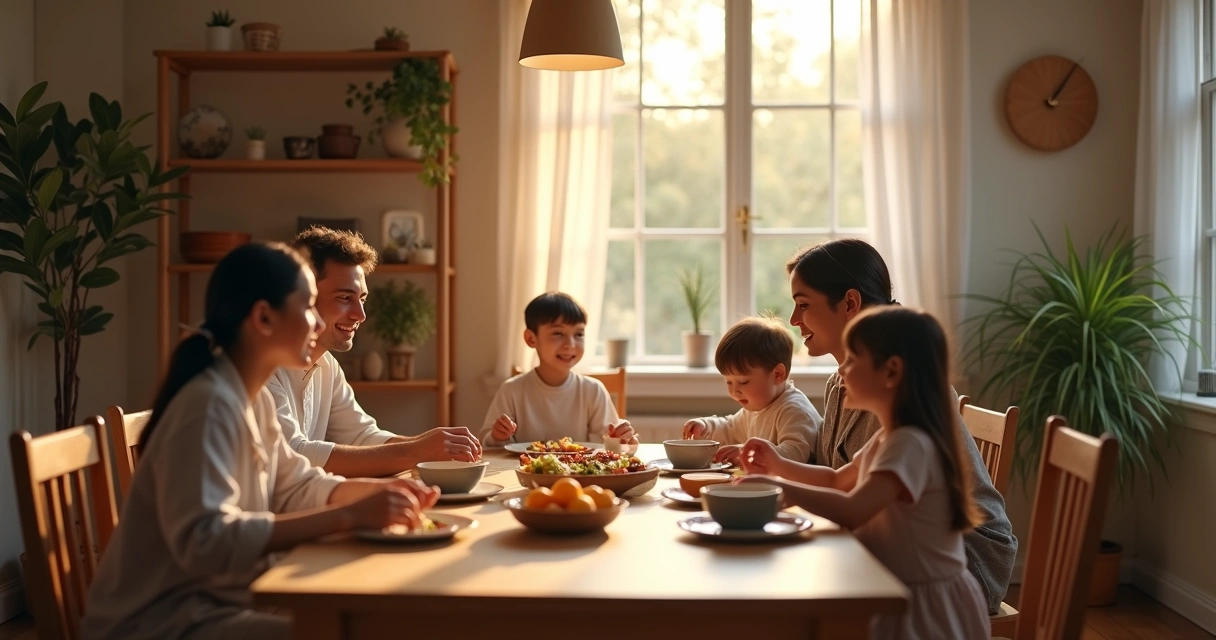
One meal together, as often as possible, changes more than people think. The point is not formal dining. It is shared presence. Phones away. Television off. Eyes available.
A study from Tufts University School of Medicine on family dinners found that regular family meals were linked to lower odds of substance use for many adolescents. The benefit was not equal in every case, especially when a child had faced high adversity, but the pattern still matters. The table can become a place of protection.
We like to keep this ritual simple:
Each person shares one fact from the day.
Each person shares one feeling from the day.
No one interrupts during the sharing.
That is enough to create a very different atmosphere.
3. The emotion naming round
Many conflicts get worse because people speak from emotion without naming it. Anger may hide shame. Silence may hide fear. Irritation may hide fatigue.
Once a day, or a few times a week, gather for a short round with one sentence each: “Today I feel...” No debate. No fixing. No teaching. Just naming.
Children learn emotional language through repetition. Adults do too. We have seen that when feelings are named early, they become easier to hold. When they are denied, they return in harder forms.
4. The repair before sleep practice
Not every problem can be solved in one night. Still, many homes suffer because small ruptures are left open. A cold tone at dinner becomes distance for three days. A missed promise becomes mistrust.
This ritual asks one question before sleep: “Is there anything between us that needs repair?” Sometimes the answer is small. “I was harsh earlier.” Sometimes it is deeper. “I felt ignored.”
The goal is not long discussion at a late hour. It is to prevent emotional debris from settling into the structure of the relationship.
Repair keeps love honest.
5. The weekly family council
Every family needs a space for practical and emotional alignment. A weekly council can hold both. We suggest setting one day and one hour each week, even if the meeting lasts only twenty minutes.
This can include:
Plans and schedules
House responsibilities
One tension that needs calm discussion
One appreciation for each person
Without a ritual like this, families often discuss serious issues in bad moments, while tired, late, or already upset. The council creates a safer container. It teaches that family life is not only felt. It is also cared for with intention.

6. The gratitude and acknowledgment moment
Homes often become places where effort is expected but not seen. One person cooks. Another cleans. A child tries hard in school. A grandparent waits quietly and helps in small ways. If these acts remain unseen, resentment can grow.
Once a day, speak one acknowledgment out loud. Keep it direct and real. “Thank you for setting the table.” “I noticed you tried again after getting frustrated.” “I appreciated your patience this morning.”
Recognition strengthens belonging because people feel visible, not merely useful.
7. The shared silence ritual
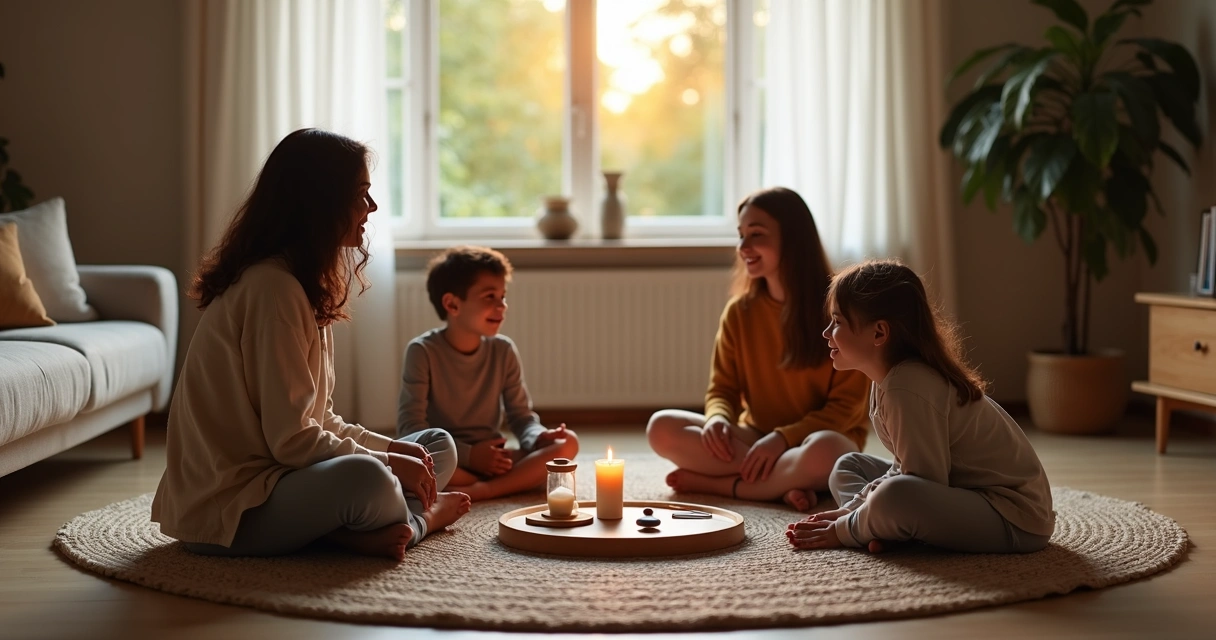
This may be the least common ritual, and one of the most moving. Sit together in silence for three to five minutes. No one has to perform peace. No one has to say the right thing. Just sit, breathe, and notice.
At first, some families laugh. Others feel awkward. That is normal. Silence reveals restlessness before it offers calm. But over time, this practice teaches self-regulation and mutual respect. It also shows that connection does not depend only on speech.
We think this ritual has quiet force. It gives the home a center.
How to begin without pressure
Trying all seven rituals at once may create strain. A family is not healed by intensity. It is shaped by consistency. Start with one ritual that fits your present reality. A shared dinner may be easier than a weekly council. An arrival pause may feel safer than a repair talk.
If we were guiding a family through the first month, we would suggest this order:
Begin with the two-minute arrival pause.
Add one shared meal without devices.
Bring in the gratitude moment.
After these are stable, the other rituals can follow more naturally. Slow change lasts longer.
Conclusion
Harmonious families are not families without conflict. They are families that know how to return. They know how to pause before reacting, speak before resentment hardens, and meet each other with more awareness than impulse.
Marquesian consciousness invites us to treat family life as a field of inner education. Every ritual becomes a lesson. We learn to listen, to repair, to feel, to wait, and to care with greater maturity. This is how a home becomes more than a shared space. It becomes a place where conscience takes form in everyday life.
Frequently asked questions
What is Marquesian consciousness?
Marquesian consciousness is an approach to human development that joins emotion, reason, presence, and ethical action. In family life, it means living with more awareness of what we feel, how we respond, and what effect our behavior has on others.
What are the seven family rituals?
The seven rituals are the two-minute arrival pause, the shared table without devices, the emotion naming round, the repair before sleep practice, the weekly family council, the gratitude and acknowledgment moment, and the shared silence ritual.
How do these rituals improve families?
They improve families by creating steady moments for presence, listening, emotional clarity, and repair. Rituals reduce confusion because they turn good intentions into repeatable actions. Over time, this can lower tension and strengthen trust.
Is it hard to practice these rituals?
At first, some rituals may feel unusual, especially in homes shaped by hurry or silence. Still, they do not need to be hard. Start small, keep the tone gentle, and repeat with patience. The aim is progress, not perfection.
Where can I learn more about Marquesian rituals?
You can learn more by studying materials and reflections focused on consciousness, emotional maturity, family patterns, and daily relational practices. We suggest beginning with one ritual, observing its effect, and building your understanding through lived experience.